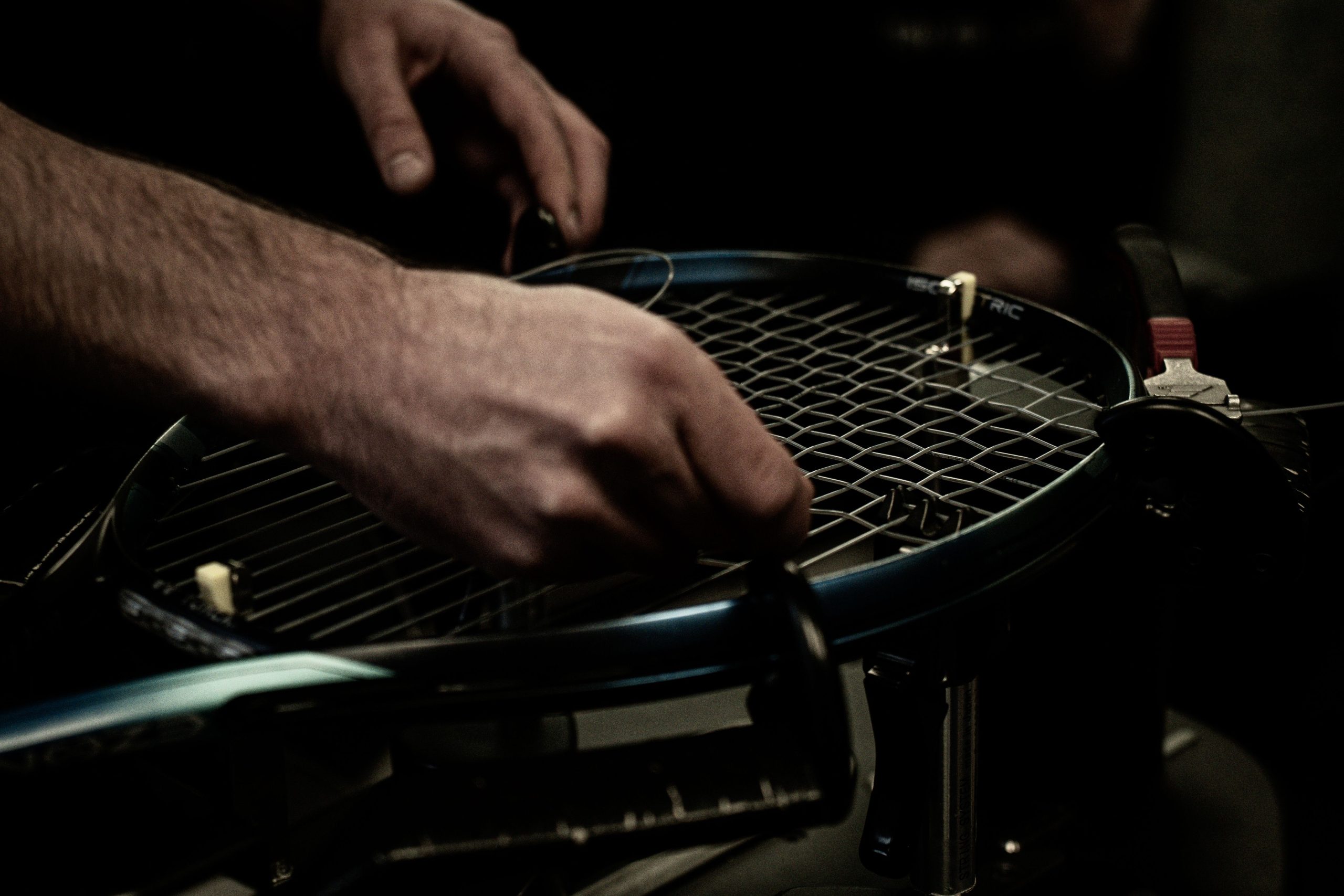
I’ve restrung my racket more times than I care to count this year. Between switching setups mid-season to find more control on clay, helping a club partner recover from a bout of tennis elbow, and just plain experimenting, strings have been on my mind constantly in 2026. The thing most players don’t realize is that your string choice makes a bigger difference to how your racket feels than almost anything else — more than grip size, more than weight. It’s the part of your setup that actually touches the ball.
So here’s my honest breakdown of the best tennis strings 2026 has to offer, organized by what you’re actually looking for. Whether you’re a beginner trying to understand what “synthetic gut” even means, or an intermediate player chasing more spin without wrecking your arm, there’s a pick below for you.
Best Tennis Strings 2026: Quick Picks
| Category | String | Best For |
| Best Overall | Luxilon ALU Power 125 | Intermediate to advanced players wanting control and feel |
| Best for Spin | Babolat RPM Blast | Aggressive baseliners who want maximum topspin |
| Best for Beginners | Prince Synthetic Gut with Duraflex | New players wanting comfort, power, and value |
| Best Multifilament | Tecnifibre NRG2 | Players wanting natural-gut feel without the price |
| Best Arm-Friendly Poly | Solinco Hyper-G Soft | Players with elbow issues who still want poly control |
| Best Natural Gut | Babolat VS Touch | Advanced players who want the absolute best feel money can buy |
| Best Hybrid Setup | Wilson Champions Choice | Players who want to combine natural gut feel with poly durability |
How I Chose These
I’m not a stringer by trade, but I’ve spent enough time at the pro shop and on court this year to have real opinions about what these strings actually feel like in play — not just on a spec sheet. I pay attention to how a string feels on a late swing, whether my arm aches the next morning, and whether I trust it on a second serve when it matters. I’ve also leaned on feedback from the players I hit with regularly, which covers a pretty wide range of skill levels and playing styles.
One thing I’ll say upfront: string choice is more personal than racket choice. Two players with the same frame and the same skill level can have completely opposite reactions to the same string. Use this as a starting point, not a verdict.
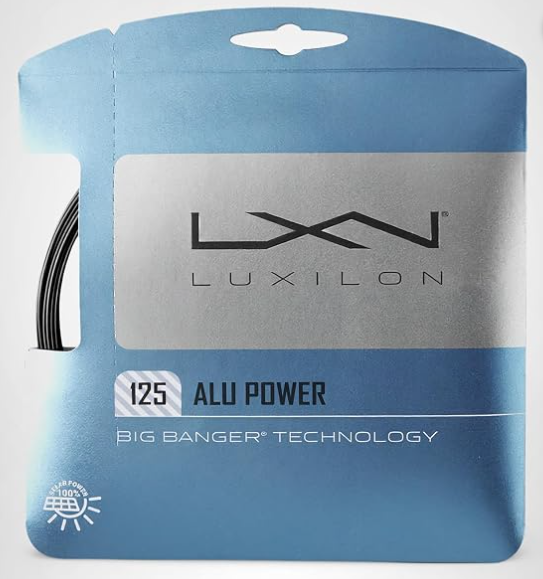
Best Overall: Luxilon ALU Power 125
If there’s one string that’s earned the right to be called the benchmark, it’s the Luxilon ALU Power. It’s been on tour for decades, it’s the most-used string on the ATP Tour in some form, and the reason it’s stuck around isn’t marketing — it’s that it genuinely delivers something other strings struggle to match: a connected, controlled feel that doesn’t sacrifice power to get there.
The ALU Power isn’t the most spin-friendly string on this list, and it’s not the softest. But it hits a middle ground that works for a remarkably wide range of players. You get crisp ball feedback, solid tension maintenance compared to most polys, and that characteristic “pop” off the stringbed that makes aggressive groundstrokes feel authoritative. For healthy arms and players hitting with some pace, it’s still the poly I’d point people to first in 2026.
The 1.25mm gauge (16L) is the standard choice — lighter feel, slightly more spin than the thicker 1.30mm. If you break strings quickly, go with the 1.30.
Who it’s for: Intermediate to advanced players with a full swing and no arm issues. Not ideal if you’re dealing with tennis elbow — that’s what the Hyper-G Soft section is for.
Best for Spin: Babolat RPM Blast
The Babolat RPM Blast is the string that made Nadal’s forehand famous. That’s not marketing — it’s literally what’s in his racket, and the spin numbers that string generates at tour level are genuinely extraordinary. For the rest of us, the RPM Blast is the go-to choice if your whole game is built around heavy topspin and you want the string to help you generate even more of it.
What makes it work is the combination of an octagonal cross-section and a silicone coating. The shape creates more bite on the ball; the coating allows the strings to snap back faster after contact, which is what produces that extra kick when the ball bounces. The feel is dampened and firm — not everyone loves it, but aggressive baseliners who live on the baseline tend to.
One trade-off worth knowing: RPM Blast goes dead faster than ALU Power. Most players will feel it losing bite after 8–10 hours of play. If you’re a frequent player, budget for restrings accordingly.
Who it’s for: Baseliners with fast, heavy swings who want maximum topspin. Not great for players who prefer a lively, powerful feel.
Best for Beginners: Prince Synthetic Gut with Duraflex
If you’re new to tennis or just picking the game back up after years away, this is the string I’d put in your racket without hesitation. Prince Synthetic Gut with Duraflex has been the benchmark beginner string for decades, and there’s a reason it hasn’t been knocked off the top spot: it’s forgiving, comfortable, reasonably durable, and cheap enough that you won’t feel bad replacing it every few months as your game develops.
Synthetic gut sits between natural gut and polyester in terms of feel — more power and arm-friendliness than a stiff poly, more control than a pure multifilament. The Duraflex compound gives it a bit more durability than most entry-level strings. It’s not glamorous, but beginners shouldn’t be chasing glamour in their strings. You want something that gives you clear feedback, doesn’t vibrate through your arm, and lets you build technique without fighting your equipment.
A practical note: most new players come with rackets strung at the factory. Factory stringing is often low quality. If your racket’s been sitting in a bag for months, getting a fresh restring with Synthetic Gut before your next session is worth every penny. See my breakdown of how much it costs to restring a tennis racket if you’re not sure what to expect.
Who it’s for: Beginners, recreational players, juniors, anyone who doesn’t want to overthink their string choice.
Best Multifilament: Tecnifibre NRG2
Multifilament strings are built from hundreds of tiny interwoven fibers, which mimics the feel of natural gut at a fraction of the price. The Tecnifibre NRG2 is the best of the multifilaments I’ve tried — comfortable, lively, and with a softness on contact that makes it genuinely arm-friendly without being completely dead.
Tecnifibre invented multifilament string, and the NRG2 is still their gold standard for recreational players. It’s noticeably more comfortable than any polyester option, which makes it the right call if you’re dealing with recurring arm pain or are coming back from tennis elbow. You’ll give up some control and spin compared to a poly, but for players who prioritize comfort and touch over raw topspin, that’s a trade-off worth making.
I’ve recommended this to several club players who had been forcing themselves to use polys because they thought that’s what serious players used — then developing elbow issues. Switching them to the NRG2 in a full bed cleared up a lot of problems quickly.
Who it’s for: Recreational to intermediate players, anyone dealing with arm or elbow discomfort, players who prioritize comfort and feel over spin and control.
Best Arm-Friendly Poly: Solinco Hyper-G Soft
Here’s the string I’d recommend if you want poly-level control and spin but your arm genuinely can’t handle a stiff co-poly. The Solinco Hyper-G Soft is one of the more impressive recent entries in the arm-friendly poly category — it keeps the control characteristics and the spin bite you expect from a square-profiled string, but with noticeably more give on contact than something like ALU Power or RPM Blast.
The original Hyper-G is already popular for being more comfortable than most co-polys, and the Soft version takes that a step further. Lab testing consistently shows excellent tension maintenance and spin scores, and from my experience hitting with it, the comfort difference over a full session is real — not just marketing copy. I finished a long doubles session recently stringing one racket with Hyper-G Soft and one with ALU Power, and the arm fatigue difference was noticeable.
It won’t suit every player — if you’re used to a really firm, crisp poly feel, the Soft version will feel a bit mushy by comparison. But for players nursing an injury or trying to play more without paying for it physically, it’s one of the best options going right now.
Who it’s for: Players managing tennis elbow or arm issues who want to stay in the poly category for control and spin. Also great for players transitioning from multifilament to poly who want a gentler entry point.
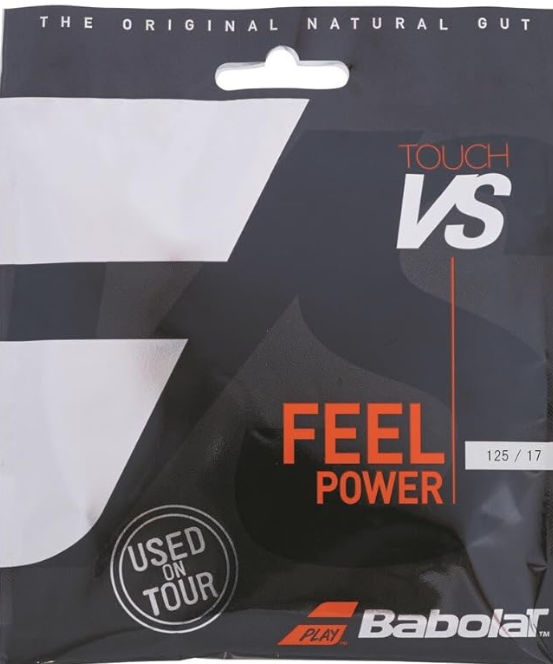
Best Natural Gut: Babolat VS Touch
Natural gut is the oldest tennis string material and, for many players, still the best-feeling one. The Babolat VS Touch is the gold standard — it’s been on the pro tour since before most of us started playing, and nothing else replicates that combination of explosive power, pin-point tension maintenance, and arm-friendliness that real gut delivers.
The honest catch: it’s expensive, and it’s not as durable as a poly in damp or humid conditions. For most players, natural gut as a full bed doesn’t make financial sense unless you’re playing at a high level and prioritize feel above everything else. Where gut really shines is in a hybrid setup (see below), where you get the arm benefits and feel of gut in the mains with the durability of a poly in the crosses.
If you’re a recreational player who breaks strings infrequently and can justify the cost, stringing with Babolat VS Touch full bed is a genuinely revelatory experience — the feel is in a different category from anything else.
Who it’s for: Advanced players with fast, technically clean swings who prioritize feel and touch. Also worth considering for players with chronic arm issues where nothing else has helped.
Best Hybrid Setup: Wilson Champions Choice
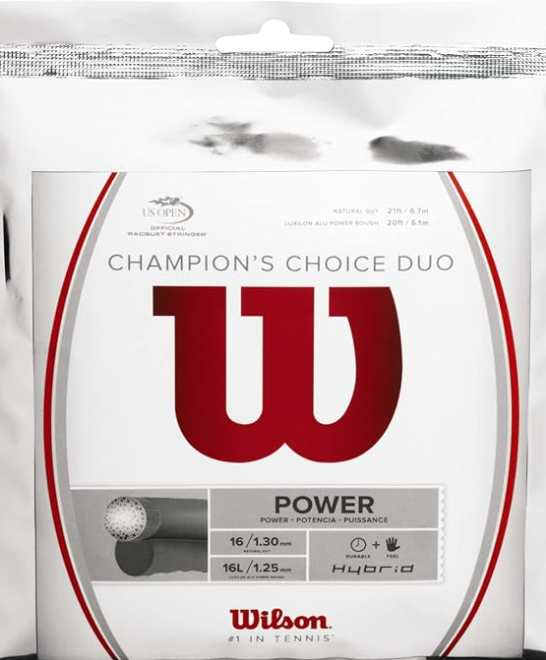
The Wilson Champions Choice is a prepackaged hybrid — natural gut in the mains, Luxilon ALU Power Rough in the crosses. It’s what Roger Federer used through most of his career, which alone tells you something about the kind of feel and control it produces.
Hybrid setups are smart for players who love the feel of natural gut but break it too quickly to justify the cost of a full gut bed. The gut mains are what you feel on contact — the softness, the power, the arm comfort. The poly crosses add durability and help maintain the gut’s tension longer. You get roughly 80% of the full gut experience at a noticeably lower string cost over time.
Champions Choice comes pre-packaged so you don’t need to buy two separate sets, which makes it easy to try without overthinking the setup.
Who it’s for: Advanced players who’ve tried full gut and loved it but want more durability. Also great for players with arm issues who want the comfort of gut with longer string life.
How to Choose the Right String
If you’re not sure where to start, run through these questions in order:
Are you a beginner or recreational player? Start with synthetic gut (Prince Synthetic Gut) or a multifilament (Tecnifibre NRG2). Don’t buy a poly — the stiffness will slow your development and potentially hurt your arm before your technique is ready for it.
Do you have arm or elbow issues? Skip polyester and go straight to multifilament (NRG2) or arm-friendly poly (Hyper-G Soft). Comfort comes first. Your string choice can make a real difference in whether you’re able to play at all.
Are you an intermediate player with solid technique chasing more spin? Try Babolat RPM Blast or Luxilon ALU Power. Start with a mid tension (50–54 lbs) — going too tight with a stiff poly amplifies every vibration.
What gauge should you buy? Thinner gauge (1.20–1.25mm, labelled 17 or 16L) = more feel and spin but breaks faster. Thicker gauge (1.30mm, labelled 16) = more durability. If you break strings quickly or play multiple times a week, go thicker.
How often should you restring? The rule of thumb is once per year for every time you play per week — so if you play twice a week, restring twice a year. More if you’re hitting hard or playing competitively. For more detail, see my full guide: how much does it cost to restring a tennis racket.
Also Worth Checking Out: TRU PRO Strings
If you want to explore beyond the mainstream options, TRU PRO makes a range of premium tennis strings worth checking out — particularly if you’re after something a bit different from the usual tour-level polys.
Use code GUYS5S4MT9ZC at checkout for 20% off storewide at truproofficial.com.
FAQ
What string do most pros use? Polyester is by far the most common on tour, with Luxilon ALU Power and Babolat RPM Blast the two most used strings. However, many pros — including Federer for most of his career — used hybrid setups with natural gut mains. Worth remembering that pros restring before almost every match, so durability isn’t a factor in their decisions the way it is for the rest of us.
Can I use polyester strings as a beginner? I’d advise against it. Polyester strings are stiff, and that stiffness transfers shock and vibration up through your arm. Without the swing speed and technically clean contact that intermediate-to-advanced players develop, you’ll feel every mishit in your elbow. Start with synthetic gut or multifilament and work your way into polys when your game develops.
Does string tension matter as much as string type? Yes — tension changes the feel of any string significantly. Higher tension = more control, firmer feel. Lower tension = more power, more comfort. Most recreational players benefit from stringing in the middle or lower end of their racket’s recommended range. Going too tight with a stiff poly is one of the most common causes of tennis elbow I see in club players.
How long does it take for strings to “go dead”? Polyester strings lose tension and feel noticeable in 8–15 hours of play. Multifilament and synthetic gut last longer in feel terms but fray and break more obviously. The test: if your strings aren’t snapping back or feel mushy on contact, it’s time to restring regardless of how they look.
Have a string question I didn’t cover, or want a specific comparison between two setups? Leave it in the comments — I’ll dig into it if enough people are asking. And if you’re in the middle of a racket decision too, check the main best tennis rackets 2026 guide — your string choice should match your frame.
Related Guides: