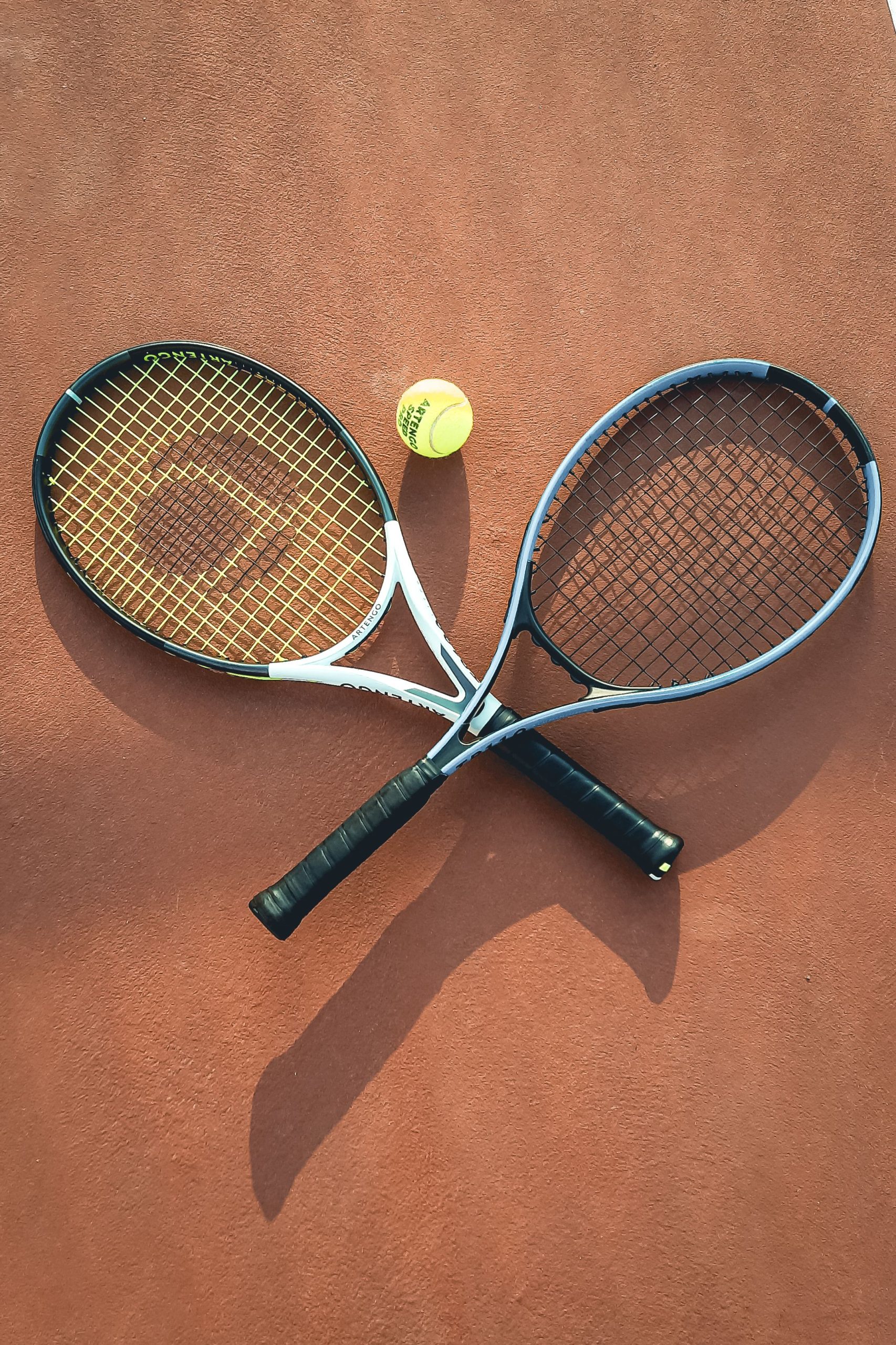
There’s a question I get asked at the club more than almost any other: “Should I get the Pure Aero or the Wilson Clash?” And I understand why it’s a hard one. Both are marquee rackets from the two biggest brands in tennis, both are priced similarly, and both are excellent in ways that make the wrong choice genuinely painful. I’ve hit extensively with both — including the 2026 Pure Aero update, which is a significantly different beast from its predecessor — and I’m going to give you a straight answer.
The short version: the Pure Aero is for spin-first baseliners; the Clash is for players who prioritize feel, flex, and control. They share a head size and a price tag, but almost nothing else.
Let’s get into why.
Quick Comparison
| Babolat Pure Aero 2026 | Wilson Clash 100 v2 | |
| Head Size | 100 sq in | 100 sq in |
| Weight (unstrung) | 300g / 10.6 oz | 295g / 10.4 oz |
| Balance | 32 cm (even/slight HL) | 31 cm (head light) |
| Stiffness (RA) | 67 | 55 |
| String Pattern | 16×19 | 16×19 |
| Length | 27 in | 27 in |
| Best For | Spin, topspin baseliners | Control, flex, flat hitters |
| Who Uses It | Alcaraz (similar spec) | Players coming off injury, arm-conscious players |
The number that matters most here is stiffness: 67 vs 55. The Pure Aero is a meaningfully stiffer racket. That single number explains most of the difference in how these two frames feel on court.
The Pure Aero 2026: What’s Changed (And It Matters)
If you’ve tested a previous generation Pure Aero and found it too boardy or stiff-feeling, the 2026 version warrants a second look. While the specs on paper are identical to prior generations — same headsize, same weight, same string pattern — Babolat has completely re-done the mold. The shaft geometry is new. The upper hoop has been reshaped. And the result is a racket that plays noticeably different from what you might be expecting.
The biggest change is feel. Previous Aero’s were famously boardy — you knew when you hit the sweet spot and you knew when you didn’t, and the feedback wasn’t always pleasant. The 2026 version has genuine throat flex for the first time, which gives the stringbed a noticeably plushier, more connected feel on contact. At medium tensions (50–55 lbs), you can actually feel the ball sink into the strings and launch out. That’s new.
The trade-off: that extra pocketing means this Aero is more tension-sensitive than its predecessors. Go too low and it loses control; you want to string it at 54–57 lbs to get the best out of it. With the right setup — a spin-friendly poly at 55 lbs — the 2026 Pure Aero might be the best version of this racket Babolat has made.
Bottom line on the Pure Aero: More comfortable than it’s ever been, still the best spin machine in its class, but now requires a bit more thought around string setup to unlock its potential.
The Wilson Clash 100: The Flexibility Story
Where the Pure Aero is designed around generating spin, the Wilson Clash is designed around protecting your arm. The Clash uses Wilson’s FreeFlex technology — a construction approach that allows the frame to flex significantly more than most rackets. That 55 RA stiffness rating isn’t just a number; it means this racket bends, absorbs shock, and returns energy in a way that dramatically reduces arm stress compared to stiffer frames.
For players who’ve dealt with tennis elbow, shoulder issues, or any kind of arm-related injury, the Clash is one of the friendliest rackets at the club level going right now. You can hit hard and often without paying for it the next morning. That’s genuinely valuable, and not something you should dismiss as a “recreational player” concern — plenty of serious club players have had to dial back their game because they chose the wrong frame.
The Clash 100’s power level is respectable without being punishing. Because of the flex, you do get some energy return on contact — it doesn’t just absorb everything. The groundstrokes feel smooth and fluid rather than explosive, and the control on flat shots is excellent. If you’re a player who likes to drive through the ball and paint lines rather than load up topspin, the Clash suits that style better.
The 100 Pro version (heavier, more head-light, higher swingweight) is worth considering if you have a full swing and want a bit more plow-through — it’s what the 100 is doing but with more mass behind it.
Bottom line on the Clash: A genuinely arm-friendly racket with excellent flat-shot control and a smooth, flexible feel. Not a spin machine, but not designed to be.
Babolat Pure Aero vs Wilson Clash: Head to Head
Spin Generation
Pure Aero wins, clearly. The 2026 update doesn’t change this. Babolat’s aerodynamic frame, combined with the 16×19 open string pattern and the spin-friendly geometries in the hoop, makes this the most spin-productive racket in the comparison. If your game is built on heavy topspin — high, looping forehands that dip into the court and kick up on the bounce — the Pure Aero helps you execute that style better than the Clash does.
The Clash generates spin, but it’s not what it was designed to optimize for. The flex absorbs some of what would otherwise translate into ball rotation.
Control and Feel
Clash wins. That softer, more flexible frame gives you a connected, intuitive feel on the ball that tells you exactly where you’ve hit it and lets you place it with precision. Players who like to take big cuts at flat groundstrokes and rely on feel to direct the ball will be more comfortable in the Clash.
The 2026 Pure Aero has improved in this department — significantly so compared to previous versions — but it still requires more effort to control at lower tension setups, and the flex profile is firmer and less instinctive than the Clash.
Arm Friendliness
Clash wins decisively. A 55 RA stiffness rating vs the Pure Aero’s 67 is not a subtle difference. If you’re dealing with elbow pain, shoulder soreness, or any history of arm injury, the Clash is the safer choice. The 2026 Aero is more comfortable than prior Aeros, but it’s still a significantly stiffer racket than the Clash.
If arm health is your primary concern, don’t ignore this. String choice helps (a multifilament or soft poly in either frame reduces shock), but the frame stiffness gap is real.
Power
Roughly even, different character. The Pure Aero generates power through spin — heavy topspin that carries pace and kicks up off the bounce. The Clash generates power through its flex response and the energy return on flat shots. Neither is a power racket in the traditional “light frame for beginners” sense — both require you to bring your own pace — but they deliver it differently.
Stability and Plow-Through
Slight edge to Pure Aero in stock form, due to higher stiffness and slightly more head-heavy balance. The Clash is very head-light and flexible, which some players find makes it feel a bit squirrely on returns or when redirecting pace. The Clash 100 Pro addresses this with more mass, but the standard 100 can feel light underfoot on hard-hit balls.
Volleys and Net Play
Clash wins. The soft, flexible feel that the Clash delivers on volleys is excellent — you can drop and angle with confidence, and the frame doesn’t vibrate in your hand on reflex puts. The Pure Aero isn’t bad at the net, and the 2026 update actually improved it there, but the Clash is the more natural volleyer.
Serve
Pure Aero wins. The extra spin potential matters enormously on serve — particularly second serves, where kicking the ball out wide or into the body buys you time and creates weak returns. If your second serve is a weakness, the Pure Aero is one of the better frames for developing a kick serve with real teeth.
Who Should Buy the Pure Aero?
You should get the Pure Aero if:
- Your game is built on topspin groundstrokes from the baseline
- You have healthy arms and no ongoing elbow or shoulder issues
- You want maximum second-serve spin potential
- You play on clay, or on fast hard courts where you need the ball to kick up
- You like Alcaraz, Rafa, or any baseline-dominant, high-topspin playing style and want to emulate it with equipment that supports it
String recommendation: Babolat RPM Blast or Solinco Hyper-G at 54–57 lbs is the sweet spot. Don’t go below 50 lbs — the new mold’s increased pocketing makes it too powerful and unpredictable at lower tensions.
Who Should Buy the Wilson Clash?
You should get the Clash if:
- You prefer a flat, driven ball over heavy topspin
- You’ve had arm or elbow issues and need a frame that won’t punish you
- You value feel, touch, and placement over spin generation
- You like playing all-court, coming to the net, or mixing up your game
- You’re transitioning from a racket with a stiff feel and want something gentler
String recommendation: The Clash’s flexibility means you can get away with a stiffer poly at slightly lower tension without the comfort penalty you’d pay in a stiffer frame. Luxilon ALU Power at 50–53 lbs is a popular setup for good reason — the Clash tames the firmness of the string and delivers excellent control.
What About the Clash 100 Pro?
If you like the Clash concept but find the standard 100 a bit too light and flexy, the Wilson Clash 100 Pro is worth trying. It’s heavier (310g unstrung), more head-light, and carries a higher swingweight that gives it more plow-through on big groundstrokes. It’s the version of the Clash that can hold its own against heavy pace without feeling like it’s being pushed around. The arm-friendly flex profile is still there — you don’t lose that — but you get more mass and stability.
Advanced players with fast, full swings often find the 100 Pro suits them better than the standard 100.
The Verdict
Choose the Pure Aero 2026 if you’re a spin-first baseliner with healthy arms. The 2026 update makes it more playable than it’s ever been, and for the player it’s designed for — someone who hits heavy topspin from the back of the court and wants equipment that amplifies that game — it’s one of the best options on the market right now.
Choose the Wilson Clash if arm health is a concern, or if you’re a flat-ball, feel-oriented player. The comfort advantage is real and meaningful, the feel on contact is excellent, and for players who’ve lost time to elbow pain, it’s one of the friendliest competitive frames going.
One thing both rackets have in common: neither of them is forgiving in the “cheap beginner racket” sense. Both reward proper technique and penalize slappy half-swings. If you’re brand new to the sport, look at something like the Babolat Pure Drive or Head Ti S6 before either of these.
But if you’re an intermediate-to-advanced player choosing between them? It comes down to one question: Do you want to spin the ball or drive it?
Spin → Pure Aero. Drive → Clash. Simple as that.
Still sorting out your setup? Check the full best tennis rackets 2026 guide for a broader look at what’s worth buying right now. And if strings are the next decision — because they should be — the best tennis strings 2026 guide covers exactly what setup works in each of these frames.
Related Guides: